FREE DELIVERY ON ORDERS OVER €50


How to apply oil to your face?

Vegetable oils are among the most skin-friendly treatments.
However, they are also among the most misused.
If poorly applied, a facial oil can remain on the surface, create an oily effect, and leave the impression of "doing nothing."
Conversely, when an oil is properly applied to the face, it can:
- strengthen the skin barrier
- improve skin comfort
- even out skin tone and soothe redness
- support the skin's natural functions long-term
At SENZA, we formulate and select raw, organic, French vegetable oils, pressed or macerated, without unnecessary processing.
But the effectiveness of a facial oil doesn't just depend on its quality. It also depends—and above all—on how it is applied to the skin.
Why use a vegetable oil on your face?
The skin naturally produces lipids, which are essential for its balance.
Vegetable oils act by mimicry with these natural lipids.
When applied correctly, they notably help to:
- strengthen the hydrolipidic film
- limit water loss
- protect the skin from external aggressions
- support natural skin repair mechanisms
👉 A facial oil doesn't force anything.
It supports the skin, provided that:
- it is well-chosen
- it is correctly dosed
- and especially that it is well-applied to the face
Should oil be applied to wet or dry skin?
This is an essential rule when applying oil to the face.
A vegetable oil does not directly hydrate the skin. However, it retains water on the skin's surface and limits its evaporation.
👉 Applied to slightly damp skin (after a hydrolat or water), a facial oil:
- spreads more evenly
- penetrates better into the hydrolipidic film
- allows for better indirect hydration
This is why SENZA oils are ideally applied to slightly damp skin, just after a hydrolat.
How much facial oil to use?
SENZA oils are pure and undiluted. Therefore, there is no need to apply a large quantity.
👉 When it comes to facial oil, less is often more.
- Thin or sensitive skin: 1 to 2 pumps
- Normal skin: 2 to 3 pumps
- Dry skin: 3 to 4 pumps maximum
An excessive amount of oil can saturate the skin, prevent proper penetration, and leave an oily film on the surface.
👉 The right equation is simple:
correct dose + proper technique = maximum effectiveness
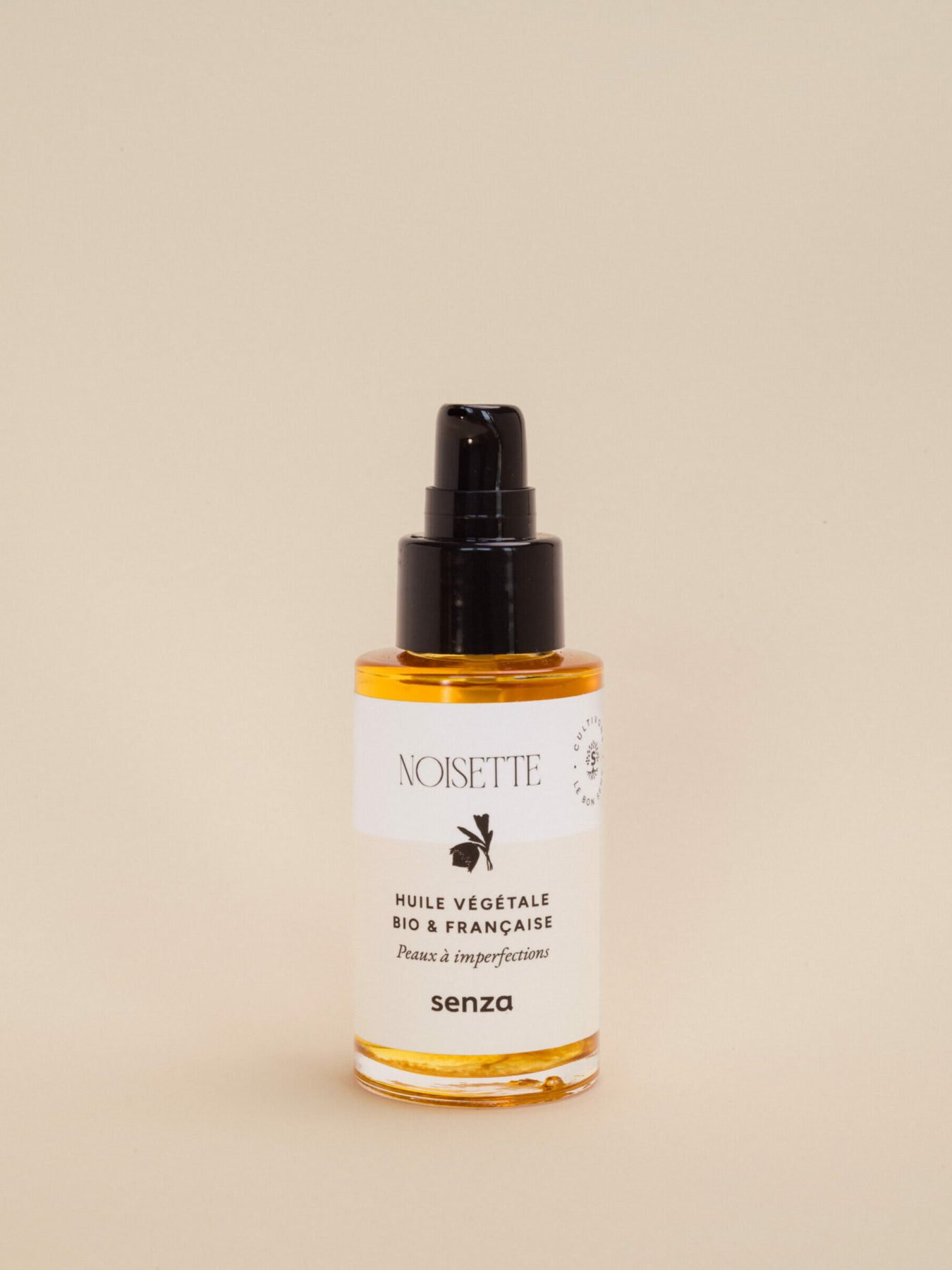
ORGANIC & FRENCH HAZELNUT OIL – 50ml - €19.90
DISCOVER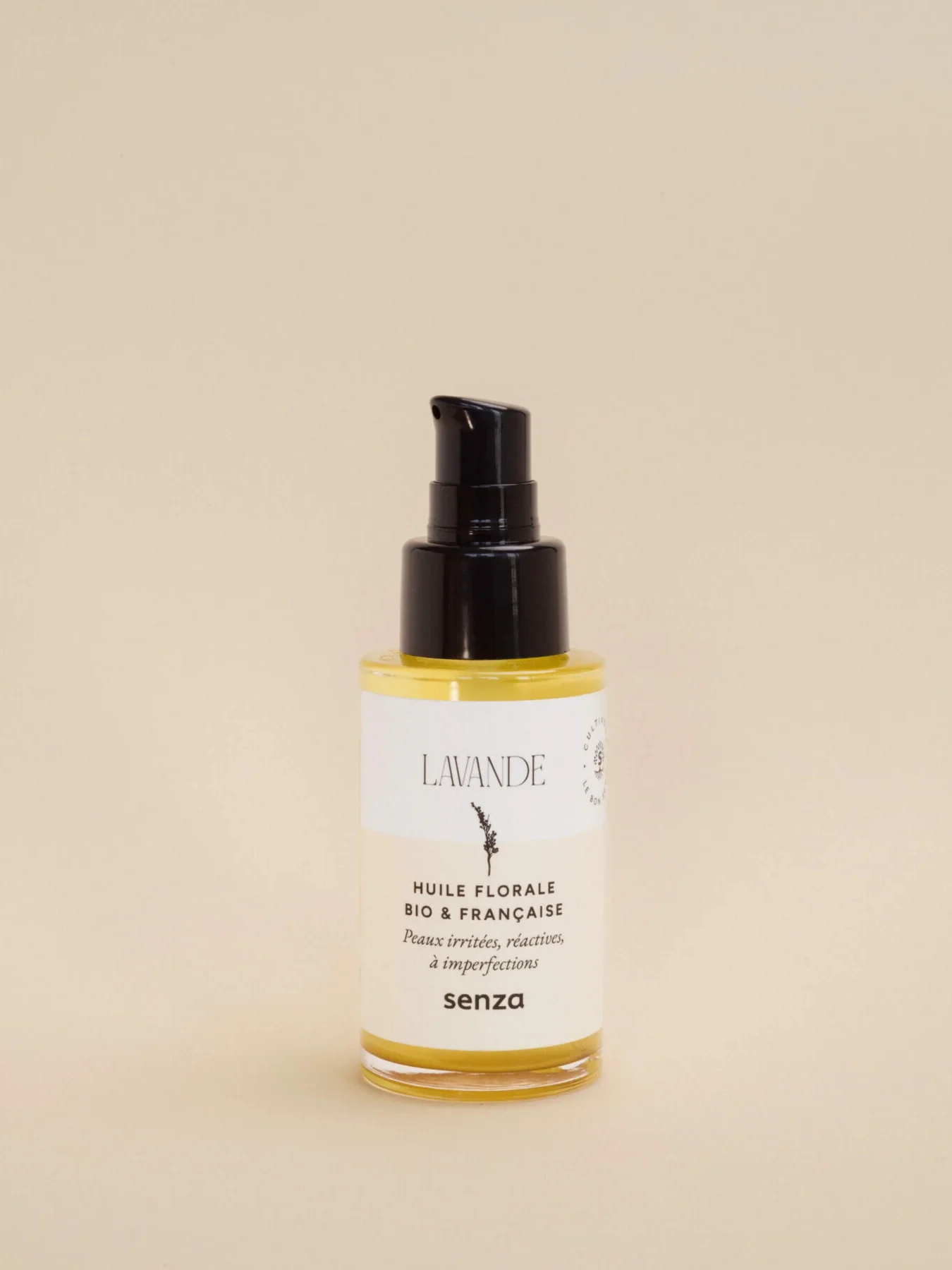
ORGANIC & FRENCH LAVENDER OIL – 50ml - €11.90
DISCOVER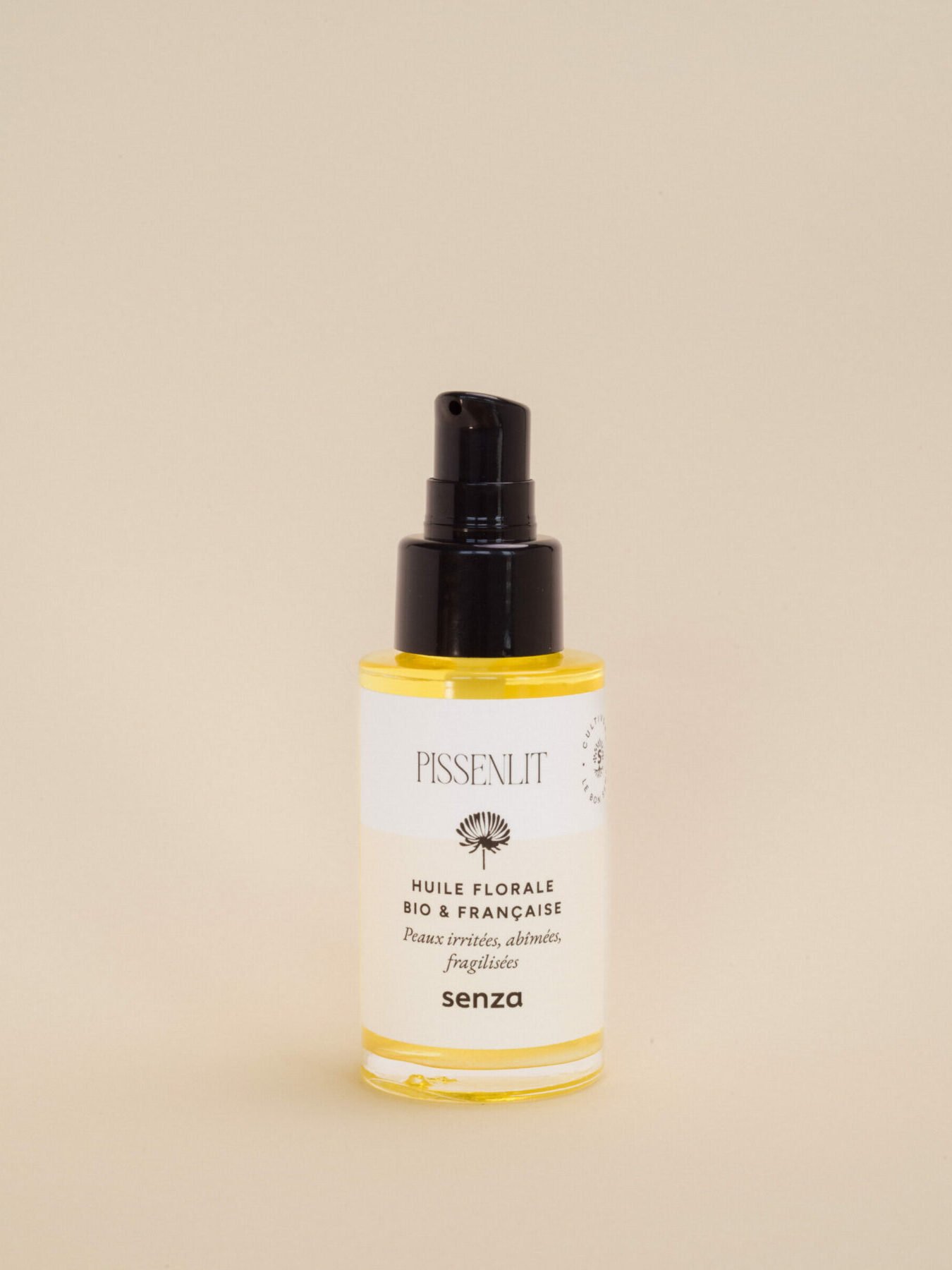
ORGANIC & FRENCH DANDELION OIL – 50ml - €11.90
DISCOVERHow to properly apply oil to the face?
The right technique for applying facial oil
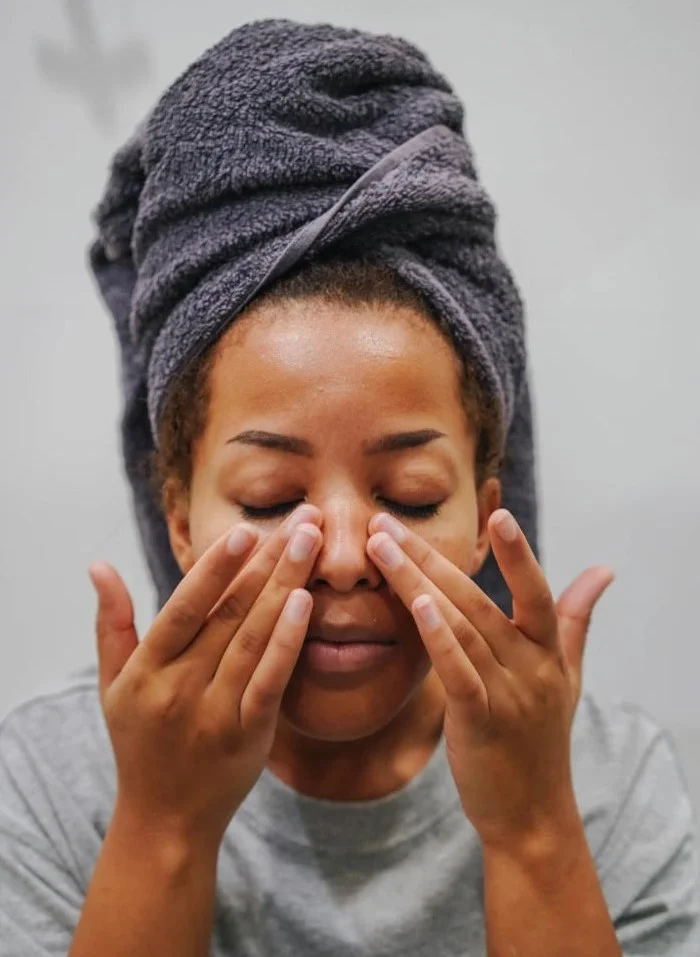
- Place the oil in the palm of your hands
- Warm the oil between your hands for a few seconds
- Apply to slightly damp skin
- Place hands on face without rubbing
- Work with slow, deep presses
- From the center outwards, then from bottom to top
The massage should remain slow, enveloping, and mindful.
This technique is beneficial on several levels:
- it stimulates microcirculation
- it promotes oil penetration
- it improves the effectiveness of the treatment
- it relaxes facial features and the nervous system
Why technique matters as much as the oil used
🧠 Focus — Technique makes the difference
Two people can use the exact same facial oil and get totally different results
solely due to the application technique.
A well-applied oil acts:
- mechanically
- sensorially
- physiologically
At SENZA, we consider application as an integral part of the treatment, not as an accessory step.
 DISCOVER
When to apply oil to the face: morning or evening?
A vegetable oil can be used morning or evening, depending on the skin's needs.
- In the morning: to protect the skin, strengthen the skin barrier, and limit dehydration throughout the day.
- In the evening: to support the skin's natural nocturnal regeneration mechanisms.
👉 A facial oil can be used:
- alone
- after a hydrolat
- or in addition to a SENZA serum if a targeted need is present
A well-chosen and well-applied oil can easily replace a cream.
Can you layer or mix several facial oils?
In most cases, a single well-chosen oil is sufficient.
However, mixtures are possible on an occasional basis, to support a targeted action.
Examples:
- Dandelion oil + lavender oil: purifying, soothing and anti-inflammatory effect, ideal for redness and blemish-prone skin.
- Hemp oil + daisy oil: night care to strengthen the skin barrier and support mature skin.
- Plum oil + night serum: very nourishing care for dry or dehydrated skin.
👉 As a general rule: simplicity, consistency, and regularity.
Typical facial routine with a vegetable oil
Simple routine – all skin types
Morning
- Sprayed hydrolat (3 spritzes)
- SENZA oil well-warmed in the hands and applied slowly
Evening
- Bi-phase makeup remover and gentle cleansing for double cleansing enthusiasts.
- Hydrolat on a cotton pad to perfect makeup removal, then sprayed hydrolat to dampen the skin.
- SENZA oil well-warmed in the hands and applied slowly
Sensitive or fragile skin
- Roman chamomile or cornflower hydrolat
- Hemp oil or sweet almond oil
Combination to oily skin
- Clary sage or lavender hydrolat
- Hazelnut oil
Application of oils on the body
- Jardin Sauvage body oil
- Apply after showering, on still damp skin
- Slow massage with moderate to firm pressure to support microcirculation from bottom to top
ORGANIC & FRENCH HAZELNUT OIL – 50ml - €19.90
DISCOVER ORGANIC & FRENCH LAVENDER OIL – 50ml - €11.90
DISCOVER ORGANIC & FRENCH DANDELION OIL – 50ml - €11.90
DISCOVERUsing face oil correctly - FAQ
Can oil replace cream?
Yes. A well-chosen and well-applied oil can be sufficient on its own. A cream is an emulsion composed of water and fatty substances, to which emulsifiers, preservatives, and texturizing agents are added. The combination of hydrolat + oil effectively replaces a cream by providing the aqueous and lipid phases, without unnecessary additives, provided the order is respected: hydrolat first, then oil on still damp skin.Why does my skin shine after applying oil?
In most cases, this is due to:
- an excessive amount
- or application on dry skin
👉 Reducing the dose and applying to damp skin usually solves the problem.
Is it normal for my skin to "drink" the oil?
Yes. This often indicates that the skin needed it. Over time, the necessary quantities decrease.
Can I use a facial oil every day?
Yes. Regularity is more important than quantity.Can an oil cause blemishes?
An unsuitable or poorly applied oil can cause reactions. A well-chosen, well-dosed, and well-massaged oil, no.To go further:
How to apply a face serum?
Best anti-allergy laundry detergent in 2026


