FREE DELIVERY ON ORDERS OVER €50


Laundry detergent and skin: understanding the link for better protection

Eczema, itching, irritation, redness… What if the culprit isn't your skin, but your laundry?
Laundry detergent, in daily contact with our clothes, sheets, and towels, plays a far more important role than we might think in our skin's comfort.
At SENZA, we explain why—and how—to choose a laundry detergent that cares for your skin, without compromising on effectiveness.
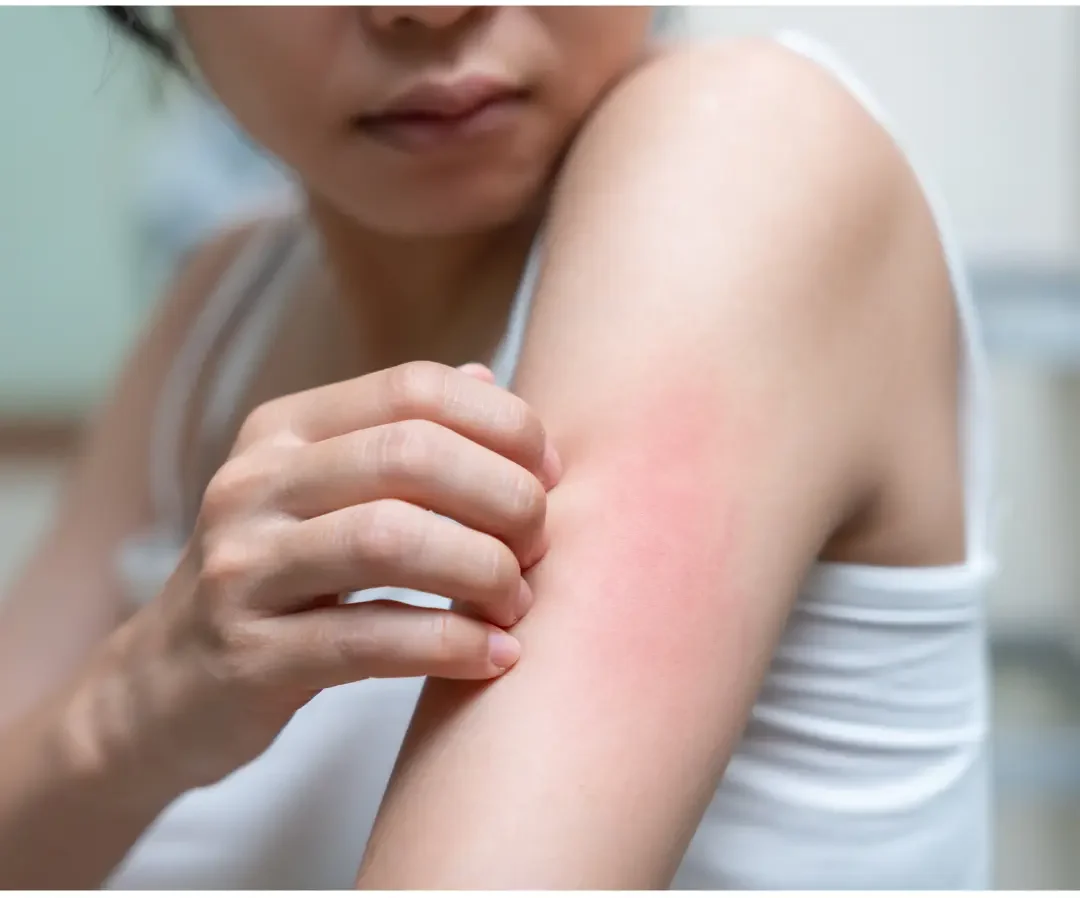
Why laundry detergent can irritate the skin
Every washed garment retains detergent residues: washing agents, fragrances, preservatives... which deposit on textile fibers, and then on the skin.
With every contact, these molecules can alter the skin barrier, cause itching, or maintain underlying inflammation.
Who is most sensitive?
- babies and children,
- people prone to eczema or dermatitis,
- dry or atopic skin.
🔗 Read: Choosing the right laundry detergent to prevent eczema and skin irritation
A multicenter study published in Contact Dermatitis shows that while direct allergies to laundry detergents are rare (<1% of tested cases), irritations due to detergent residues are, however, frequent, especially in the presence of fragrances and aggressive surfactants (PubMed 11807430).
Short and long-term effects of an unsuitable detergent
Before looking for solutions, it's important to understand how an unsuitable detergent can affect your skin, both immediately and over time.
Short term
The most visible effects appear quickly:- redness after wearing clean clothes,
- sensation of tightness or "itchy skin,"
- localized eczema on friction areas (neck, wrists, folds…).
Long term
Repeated exposure, even at very low doses, weakens the skin barrier and can promote the appearance of sensitivities or chronic eczema.
A study published in PLOS One (2022) showed that detergent residues on the skin increase transepidermal water loss (TEWL), alter skin flora, and promote inflammatory reactions (DOI:10.1371/journal.pone.0268651).
🔗 Read: Laundry detergent without endocrine disruptors

Concentrated natural laundry detergent 5L - €39.00
DISCOVER
Concentrated lavender laundry detergent 5L - €39.00
DISCOVER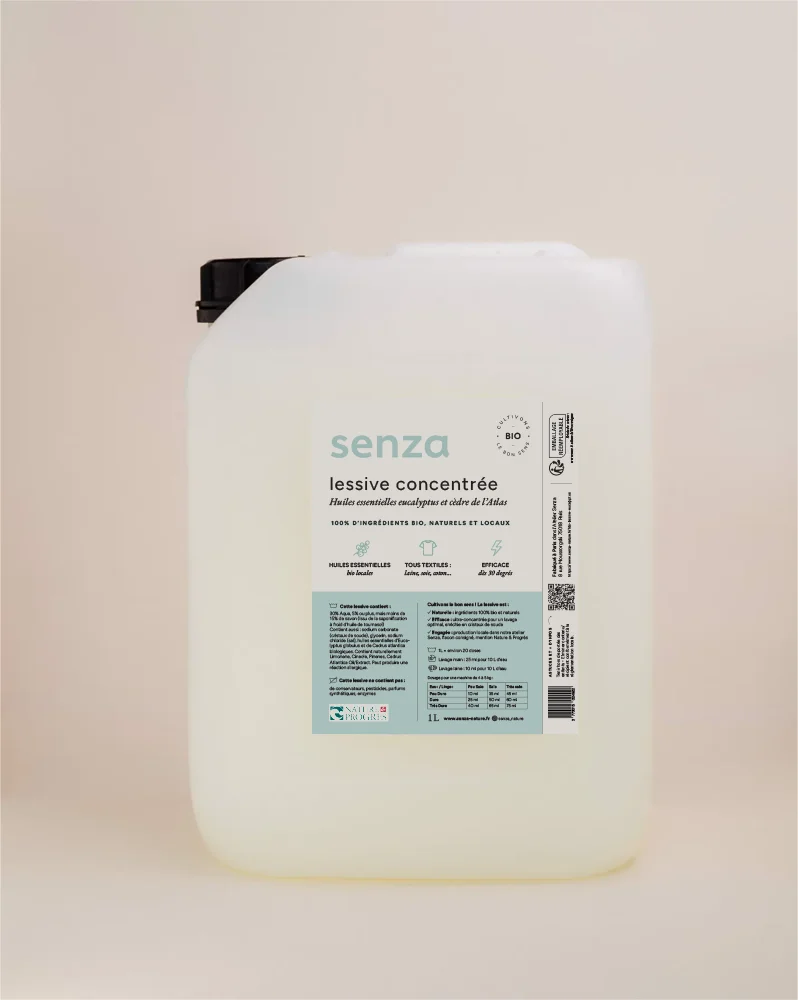
Concentrated eucalyptus laundry detergent 5L - €39.00
DISCOVER🚫 Ingredients to absolutely avoid
To limit these effects on your skin, it's essential to know which ingredients to absolutely avoid in your laundry detergent.
Synthetic fragrances
Fragrances are the leading cause of skin allergies in household products (source: Santé publique France). Even if labeled "natural," they often contain regulated allergens like limonene, linalool, or citral. Therefore, laundry that "smells good" is not necessarily healthy.🔗 Read: Organic laundry detergent that smells good: how to differentiate between natural and chemical fragrances
Preservatives and optical brighteners
Some release formaldehyde, a recognized irritant and classified as a possible carcinogen (IARC, WHO).
Optical brighteners, on the other hand, "make up" the laundry to make it whiter, without cleaning better—and leave persistent chemical residues on the fibers.
Petrochemical-derived surfactants
Powerful surfactants like sodium dodecyl sulfate (SDS) are known irritants that increase skin permeability (source: Journal of Allergy and Clinical Immunology, 2023). They facilitate the penetration of other allergens and disrupt the skin's natural protective barrier.🔗 Read: Natural household products: why say no to the 1000 chemicals in our cupboards

⚠️ False marketing promises
Beyond ingredients, certain marketing claims can also be misleading and give a false sense of security.
“Hypoallergenic laundry detergent”: a misleading claim
There is no strict legal definition of the term hypoallergenic laundry detergent.
A detergent labeled "hypoallergenic" may therefore contain potentially allergenic substances, as long as they remain below certain thresholds. An ADEME investigation also points out that this claim is purely declarative and has no regulatory value.
🔗 Read: Hypoallergenic or allergen-free?
“Dermatologically tested detergent”
This only means that the product has been tested on a small panel of volunteers—not that it is compatible with all skin types. The tests do not guarantee either safety or real effectiveness.“Special baby laundry detergent”
Behind the reassuring image, many "baby" detergents still contain fragrance or texturizing agents.
However, infant skin is 5 times more permeable than adult skin (source: PLOS One, 2022).
🔗 Read: How to choose the best baby laundry detergent: tips and tricks

🌿 How to choose a truly skin-friendly laundry detergent
A good laundry detergent for the skin should be:
- short in ingredients (4 to 6 maximum),
- fragrance-free,
- free of preservatives and dyes,
- free of sulfated surfactants.
The simpler the formula, the safer it is.
🔗 Read: The best anti-allergy laundry detergent: complete guide for sensitive skin and allergies
👶 Laundry and baby skin: maximum vigilance
Babies often wear the same clothes day and night, washed very frequently.
The slightest trace of fragrance or surfactant can irritate their delicate skin or trigger eczema. That's why choosing the best baby laundry detergent is essential to limit the risk of skin irritation.
The website sante.gouv.fr recommends avoiding scented products for infants, by opting for simple detergents, free of additives, and well-rinsed.
SENZA Natural Laundry Detergent perfectly meets these criteria: fragrance-free, allergen-free, made from raw, biodegradable ingredients.
💧 SENZA Natural Laundry Detergent: the simple, healthy, and effective solution
Ultra-short formula, maximum effectiveness:
- 🌻 Saponified sunflower oil
- 💧 Water
- 🧂 Washing soda
- ⚗️ Caustic soda
That's it.
Zero fragrance, zero allergens, zero compromise.
👉 Discover SENZA Natural Laundry Detergent
Suitable for:
- sensitive skin and babies,
- all types of laundry,
- and even people with allergies or eczema.
🔗 Read: Homemade laundry detergent recipe with SENZA: easy, economical, and healthy
💡 Good habits to limit daily irritations
- Do not overdose detergent: too much product = more residues.
- Run an extra rinse cycle if your machine allows it.
- Dry laundry thoroughly to avoid stagnant moisture.
- Avoid chemical fabric softeners, which leave irritating films on fibers.
- Choose natural fabrics (organic cotton, linen, hemp).
🌱 Key takeaways to protect your skin
Laundry detergent is not a detail: it is the first skin care product.
Choosing a natural and minimalist formula means protecting your health, your family's, and the planet's.
And at SENZA, that's been our promise from day one:
➡️ Short, transparent, and effective formulas, designed for sensitive skin.
🧺 Discover SENZA Natural Laundry Detergent
🌿 Read all our articles on natural laundry detergents
Concentrated natural laundry detergent 5L - €39.00
DISCOVER Concentrated lavender laundry detergent 5L - €39.00
DISCOVER
Concentrated eucalyptus laundry detergent 5L - €39.00
DISCOVER📚 Cited Sources
- Santé publique France, "Fragrances in household products and their effects on health", 2021.
- ADEME, "Environmental and hypoallergenic claims: framework and limits", 2022.
- Contact Dermatitis, "Multicenter study of laundry detergent patch testing", 2002.
- PLOS One, "Skin barrier disruption by detergent residues", 2022.
- Journal of Allergy and Clinical Immunology, "Detergents and epithelial barrier dysfunction", 2023.
- Cleveland Clinic & Healthline, "Laundry detergent allergies", 2023.
- Ministry of Health (sante.gouv.fr), "Hygiene products for babies: usage precautions", 2023.
Laundry and Skin - FAQ
Why does my skin react after wearing clean clothes?
Irritations often come from detergent residues that remain on the fibers: synthetic fragrances, preservatives, optical brighteners, or aggressive surfactants. These substances can cause redness, itching, or contact eczema.Are "hypoallergenic" detergents really safer?
Not necessarily. The term "hypoallergenic" has no regulatory definition. A detergent can carry this label while still containing allergens below a certain threshold.What type of laundry detergent is best for sensitive skin?
A laundry detergent without fragrance, without irritating preservatives, and with gentle surfactants is preferable. Short, natural, and minimalist formulas significantly reduce skin reactions.
Can detergent residues weaken the skin barrier?
Yes. Several studies show that certain ingredients (SDS, fragrances, optical brighteners, etc.) increase skin permeability, disrupt the skin's flora, and promote inflammation.Is a "special baby" detergent really gentler?
Not always. Many "baby" detergents still contain fragrance or unnecessary texturizing agents. However, a baby's skin is up to 5 times more permeable than an adult's.
How to avoid irritations due to laundry detergent?
- Choose a fragrance-free formula
- Use the right dose
- Run an extra rinse
- Opt for natural detergents with transparent compositions
Is a natural laundry detergent really effective?
Yes, provided it uses gentle yet powerful surfactants. Effectiveness comes from the formula, not the fragrance or brighteners.How to choose a laundry detergent without endocrine disruptors?
Check for the absence of: synthetic fragrances, questionable preservatives (such as certain formaldehyde releasers), optical brightening agents, and petrochemical-derived surfactants.To go further:
Buying laundry detergent in bulk
Good-smelling organic laundry detergent: how to distinguish between natural and chemical fragrances


