FREE DELIVERY ON ORDERS OVER €50


Best Hypoallergenic Laundry Detergent: What It (Really) Means—and How to Choose Without Getting Ripped Off

The term hypoallergenic is now ubiquitous on laundry detergent bottles.
However, it does not always guarantee a formula genuinely suitable for sensitive skin.
Behind this often marketing-driven label, some compositions may still contain
fragrances, preservatives, or irritating agents.
Understanding what a hypoallergenic detergent truly means is essential for making an informed choice.
This is particularly relevant for individuals with reactive skin, atopic profiles, as well as
babies and children, whose skin barrier is more fragile.
In this guide, we help you identify the best hypoallergenic detergent by explaining what this term implies,
which ingredients to avoid, and which criteria to prioritize to protect skin without relying on mere marketing promises.
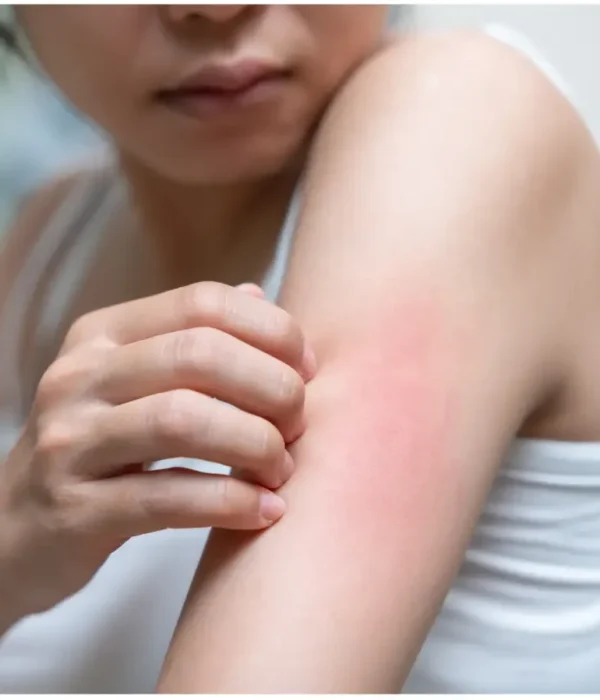
⚠️ “Hypoallergenic”: a marketing… and (somewhat) scientific term
Contrary to what many imagine, “hypoallergenic” does not mean “allergen-free”. It primarily means that the product has been formulated to reduce the risk of causing a reaction, without being able to guarantee it 100%.
- there is no universal definition that applies everywhere;
- it does not guarantee the total absence of potentially allergenic substances;
- a person may still react to an ingredient, even if the detergent is called hypoallergenic.
In practice, the term relies more on formulation choices (fewer fragrances, fewer common irritants) than on mandatory certification.
In the United States, the FDA indicates that there is no federal standard precisely defining the use of the term “hypoallergenic” for cosmetics (and, more broadly, claims of this type do not require FDA validation before being placed on the market).
In Europe, it is mainly ingredient safety rules and labeling obligations that govern consumer protection: the word “hypoallergenic” remains an indicator… but it never replaces reading the composition.
🧠 Why “allergen-free” is almost impossible
From a scientific point of view, an allergic reaction never depends solely on the product. It results from a set of factors: the person, the exposure context, the duration of contact, the concentration of substances, and the state of the skin barrier.
An ingredient that is very well tolerated by the majority can thus cause sensitization in some people, particularly when the skin is already fragile (atopic skin, eczema, repeated irritations).
👉 In practice, this means that even a very gentle detergent, called hypoallergenic — or even formulated without known allergens — can still cause a reaction in some sensitive profiles.
This is why the term “allergen-free” must be understood as a reduction of risk, and not as an absolute guarantee of no skin reaction.
🧪 Ingredients to avoid in a hypoallergenic detergent
Before being able to identify the best hypoallergenic detergent, it is essential to understand which ingredients are most often involved in skin reactions and why they pose a problem for sensitive skin.
🚫 Fragrances
Fragrances are among the most frequent causes of contact allergies. Some of their components — including those of natural origin — are recognized as potentially allergenic.
Lists of fragrance allergens are also scientifically identified and integrated into European regulations, to help sensitized individuals avoid them.
🚫 Harsh foaming agents
Some powerful surfactants, such as Sodium Lauryl Sulfate (SLS) or Sodium Laureth Sulfate (SLES), are very effective at removing dirt, but can be irritating for fragile or sensitized skin.
🚫 Optical brighteners and dyes
Optical brighteners and dyes give the illusion of whiter or "cleaner" laundry, but they have no real cleaning function. Their presence constitutes an additional risk factor for sensitive skin.
🚫 Sensitizing preservatives
Some preservatives are associated with phenomena of skin sensitization, particularly when they are present in products whose residues remain in prolonged contact with the skin, as is the case with laundry.

Natural concentrated hypoallergenic detergent 5L - €39.00
DISCOVER🧭 Quick reminder: irritation vs. allergy
When talking about skin reactions related to hypoallergenic detergent, it is important to distinguish between irritation and allergy, two different but often confused mechanisms.
👉 Irritation: a non-immune reaction, generally linked to the dose, frequency of exposure, or aggressive nature of an ingredient.
👉 Contact allergy: a specific immune reaction, which can occur even at a low dose, often after a phase of prior sensitization.
Both types of reactions can be triggered by a detergent. In fact, the ingredients involved are often the same, which explains why certain substances are particularly monitored in so-called hypoallergenic formulas.
🧴 How to choose a truly hypoallergenic detergent for sensitive skin
A detergent that truly deserves the name hypoallergenic must meet specific criteria, based on skin tolerance and not on marketing.
- ✔️ Be formulated without added fragrance, even of natural origin
- ✔️ Avoid aggressive foaming agents not essential for cleaning
- ✔️ Be composed of simple, legible, and transparent ingredients
- ✔️ Have been tested for skin tolerance, particularly on sensitive skin
- ✔️ Be designed to limit residues on textile fibers
👉 The key is not to confuse a marketing promise with a real scientific approach: it is the formulation and composition that make the difference, not the word “hypoallergenic” on the label.
🧾 Composition (INCI) of a hypoallergenic detergent: the SENZA case
In accordance with the Detergents Regulation (EC No 648/2004), detergent ingredients are declared in percentage ranges. At SENZA, formulation transparency is one of the key commitments.
5% or more, but less than 15%:
-
Soap
(from the saponification of organic sunflower oil)
Also contains:
- Sodium Carbonate (soda crystals)
- Glycerin (glycerin naturally resulting from saponification)
- Sodium Chloride (salt)
👉 No added fragrance.
👉 No colorant.
👉 No optical brightener.
👉 No sensitizing preservative.
The SENZA formula is designed without ingredients recognized as regulated allergens and aims to minimize the risks of sensitization, in a logical coherence with a hypoallergenic detergent for sensitive skin.
🔬 Scientific breakdown of Senza nature hypoallergenic detergent: ingredient by ingredient
To understand why SENZA nature detergent is suitable for sensitive skin, let's examine its composition ingredient by ingredient.
🧼 Soap (from organic sunflower oil)
Soap is a surfactant obtained by saponification, here from an organic vegetable oil. It allows fats and dirt to be solubilized while remaining well tolerated by the skin, provided it is correctly dosed and effectively rinsed.
➡️ Unlike some powerful synthetic surfactants, soap has been historically used for sensitive skin, including for washing baby clothes.
🧪 Sodium Carbonate (soda crystals)
Sodium Carbonate is a mild alkaline agent used to improve overall washing efficiency.
- strengthen the cleaning action of soap;
- help neutralize fats;
- optimize low-temperature cleaning.
➡️ It is not an allergen per se. Its main challenge lies in proper dosing, to avoid excessive residues on textiles.
💧 Glycerin
Glycerin is a natural byproduct of saponification. It has humectant properties and contributes to a better overall tolerance of the formula.
➡️ It is not added as a "marketing active": it is naturally present, which testifies to a simple and controlled formulation.
🧂 Sodium Chloride (salt)
Sodium Chloride is used as a structuring agent to stabilize the formula.
➡️ Inert from an allergological point of view, it has no perfuming or cosmetic role, only a technical function.
Natural concentrated hypoallergenic detergent 5L - €39.00
DISCOVER🧠 Why this formula is consistent with a truly hypoallergenic approach
Without ever promising a total absence of reaction — which would be scientifically inaccurate - Senza nature hypoallergenic detergent respects the most consensual criteria to reduce the risk of skin sensitization.
- ✔️ No added fragrance, the main cause of contact allergies
associated with detergents - ✔️ No unnecessary aesthetic additives
(colorants, optical brighteners) - ✔️ A short, legible, and transparent formula
- ✔️ Known and documented ingredients,
long used for their cleaning properties - ✔️ A design aimed at limiting residues
potentially irritating on laundry
👉 This is precisely what a honest approach behind the term “hypoallergenic” actually means:
Reduce known risk factors, without over-selling an impossible promise.
📌 Practical tips for optimizing skin tolerance
Even with a well-formulated hypoallergenic detergent, certain washing habits can make a real difference to skin tolerance.
- ✔️ Dose the detergent correctly: using more product does not improve washing, but increases the risk of irritating residues on the fabric.
- ✔️ Activate a long rinse or "rinse +" if your machine allows it, to limit detergent traces on laundry.
- ✔️ Avoid scented fabric softeners and scented additives: they are a frequent cause of irritation and cancel out the benefits of a hypoallergenic detergent.
👉 These simple actions effectively complement the use of a detergent suitable for sensitive skin and further reduce the risk of skin reactions.
🧠 In summary: how to recognize a truly hypoallergenic detergent
- “Hypoallergenic” means a reduction of risk, not a total absence of possible reactions.
- From a scientific point of view, skin does not react in the same way depending on the individual, according to their sensitivity and skin condition.
- A detergent truly suitable for sensitive skin must be simple, transparent, without added fragrance, and formulated to limit potentially problematic ingredients.
- A short and legible composition (clear INCI) is a good indicator of quality, even if tolerance always remains individual.
👉 In practice, it is the consistency of the formulation and the simplicity of the ingredients that make the difference, much more than the "hypoallergenic" claim alone.
Natural concentrated hypoallergenic detergent 5L - €39.00
DISCOVERBest Hypoallergenic Detergent - FAQ
What is the best hypoallergenic detergent for sensitive skin?
The best hypoallergenic detergent is one that is fragrance-free, with a short composition, well-tolerated ingredients, and designed to leave minimal residue on laundry. The term “hypoallergenic” should reflect a formulation approach, not just a marketing argument.
Is a hypoallergenic detergent really allergen-free?
No. Hypoallergenic means reducing the risk of a reaction, not a complete absence of allergens. A reaction also depends on the individual, the duration of exposure, and the condition of the skin.
Why are fragrances problematic in detergents?
Fragrances are one of the main causes of contact allergies related to detergents. Even if natural, they can contain sensitizing substances, especially for reactive or atopic skin.
Are hypoallergenic detergents suitable for babies?
Yes, provided they are fragrance-free, well-rinsed, and formulated with simple ingredients. As babies have more permeable skin, these criteria are particularly important.
Is an eco-friendly detergent necessarily hypoallergenic?
Not necessarily. A detergent can be eco-friendly without being optimal for sensitive skin. The priority criterion remains skin tolerance, before the environmental argument.
How can I limit the risk of a reaction with a detergent?
It is recommended to use the correct amount of detergent, opt for extra rinsing, and avoid scented fabric softeners, even if the detergent is labeled hypoallergenic.
Should I rely solely on the word "hypoallergenic" on the label?
No. It is essential to read the composition (INCI) and prefer transparent, short formulas without unnecessary additives. The word alone is not enough.
To go further:
Best Baby Detergent in 2026
Best Anti-Allergy Detergent in 2026


