FREE DELIVERY ON ORDERS OVER €50


Using organic vegetable oils daily

By Stéphanie Mandret
For millennia, organic vegetable oils, essential oils, hydrolats, and floral waters have been used for therapeutic and cosmetic purposes.
Nature is a magnificent source of benefits and incredible active ingredients for our health and well-being.
When well chosen, these active ingredients will become a formidable ally to illuminate your skin while respecting your health and the planet.
Let's focus more specifically on organic vegetable oils for cosmetic use.
Over the past few decades, through advertising and marketing campaigns of all kinds, petrochemical products have invaded our skincare routines.
And yet, who today consciously wants to apply mineral oil to their skin? Let's remember that mineral oil is a mixture of inert and non-oxidizable hydrocarbons.
How many times have you felt that this kind of cosmetic stripped your skin more than it repaired it? How many allergic reactions to these aggressive products have you observed?
There's nothing like a natural vegetable oil to heal, nourish, restore, soften, moisturize, and tone the skin!
Yes, the supply of essential fatty acids is the best guarantee of real effectiveness.
💡 What is the difference between organic vegetable oil and an oily macerate?
-
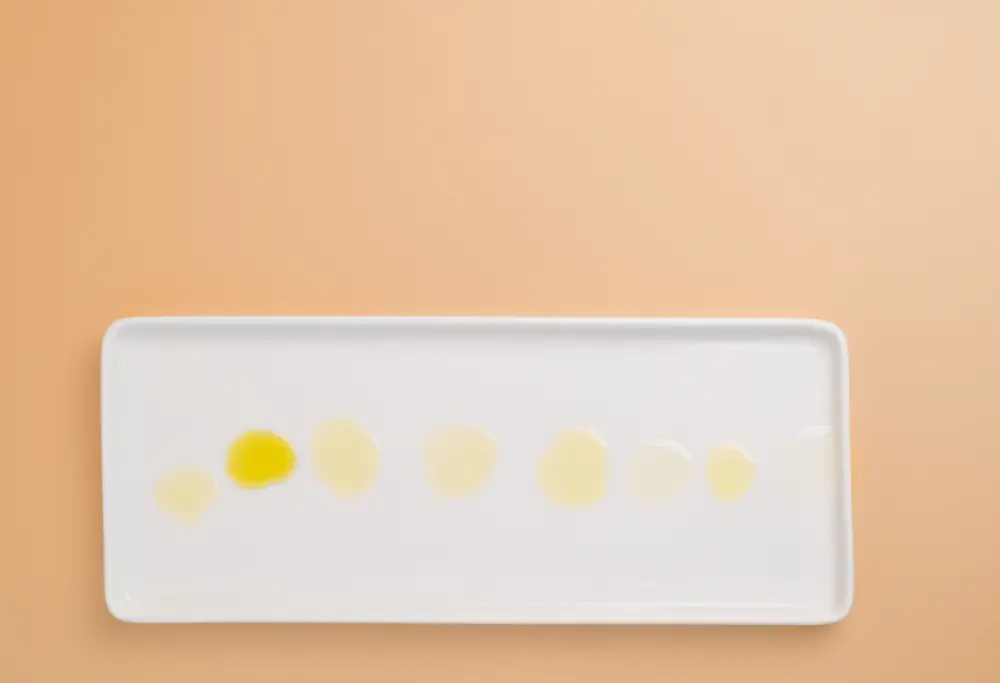
Organic vegetable oils are fatty substances obtained by cold pressing certain "oilseed" parts of a plant: for example, seeds (hemp, raspberry), nuts (macadamia), fruits contained in kernels (sweet almond, apricot), pulp (coconut, avocado), etc.
-
Oily macerates, on the other hand, are obtained by macerating a medicinal plant (dandelions, daisy, ivy, calendula, St. John's wort, carrot, etc.) in a vegetable oil that is not very prone to rancidity and ideally neutral in odor (sunflower, olive).
In addition, vegetable oils:
✓ Respect the skin because they have similar constituents (fatty acids, vitamin E, ceramides...);
✓ Are easy to use;
✓ Can be targeted according to skin problems encountered
Now that we are more careful about what we apply to our skin, let's learn together how to use organic vegetable oils in the best way. See also makeup remover oily film on the skin
❓ How to store an organic vegetable oil?
How to store an organic vegetable oil? It can be stored for 12 to 24 months away from light and heat.
After opening, it should be used within 6 months. This changes to 3 months for vegetable oils rich in unsaturated fatty acids (Inca Inchi, rosehip, flax, rapeseed, evening primrose...).
The best, if you can, is to store sensitive vegetable oils in the refrigerator.
💡 How to choose your organic vegetable oils for cosmetic use?
Learning how to use organic vegetable oils correctly according to your skin type is important. A vegetable oil often has several benefits but is not suitable for all skin types!
Vegetable oils are classified according to their comedogenic index.
What do we mean by that?
Some vegetable oils will clog skin pores and worsen or promote the appearance of imperfections. They are classified into 6 categories:
✓ Index 0 being a non-comedogenic oil (hemp, hazelnut, sunflower, argan, avocado, etc.)
✓ Index 1: slightly comedogenic oil (cucumber seed, raspberry seed, black seed, etc.)
✓ Index 2: moderately comedogenic oil (sweet almond, olive, apricot, etc.)
✓ Index 3: comedogenic oil (carrot oily macerate, rosehip, etc.)
✓ Index 4: quite comedogenic oil (coconut, flax, palm, etc.)
✓ Index 5: very comedogenic oil (wheat germ)
That's why it's important to know certain things before using a pure vegetable oil on the skin.
Here are some guidelines:
| Uses / skin type | Oil or macerate to prioritize |
| Normal skin | Hemp, jojoba, argan, raspberry seed… |
| Oily / acne-prone skin | Hazelnut, lavender, apricot kernel… |
| Dry skin | Dandelion, plum, sweet almond, mirabelle, argan… |
| Mature skin | Plum, hemp, raspberry seed, rosehip… |
| Sensitive / atopic skin | Sweet almond, lavender, raspberry seed, borage… |
| Couperose and redness | Hemp, calendula, tamanu, safflower… |
| Dry hair | Hemp, plum, mirabelle, avocado, argan, coconut… |
| Makeup removal | Sweet almond, hazelnut, jojoba, apricot kernel |
✅ How to use an organic vegetable oil on the skin?
How to use an organic vegetable oil on the skin? For use on the face, you can choose a pure low-comedogenic organic vegetable oil or create a synergy of 2 or 3 vegetable oils to combine their benefits or to be able to integrate vegetable oils with a higher comedogenic index.
Simply take 3 drops of vegetable oil, warm them between your palms, and gently massage your face.
Little tip: for well-hydrated skin, it is essential to moisten your skin before applying a vegetable oil.
Why should the skin be moistened before applying a treatment?
The 3 key points:
- When you hydrate the skin, the lipids in the skin barrier act like a seal, trapping moisture and preventing its evaporation. Emollient ingredients, like oils, work better with damp skin and help trap water in the skin. This maintains hydration longer.
- Pre-moistening facilitates the absorption of moisturizing ingredients because water allows pores to open slightly, promoting the penetration of treatments and maximizing benefits.
- Slightly damp skin allows for more even product application, ensuring uniform hydration.
A few spritzes of hydrolat or floral water will be enough to moisten the skin!
The little "but": the need to moisten the skin depends on the product and the skin type! A product can become irritating if it penetrates too deeply, for example. If it is not suitable for the skin type, the skin may also react by producing more sebum.
The ideal is therefore to test on a small patch of skin before starting, if possible on the area that will ultimately receive the product!
💈 How to use an organic vegetable oil on hair?
How to use an organic vegetable oil on hair? For a hair oil bath, it is not about applying an astronomical amount (rinsing would then be very difficult) but the equivalent of about ten drops on short hair and up to 1 ml or 2 ml on long hair.
Leave it on for a good hour, or even overnight, wrapped in a heated cap or towel, then rinse and apply your usual shampoo.
It is advisable to apply vegetable oil to dry hair to prevent water from acting as a "barrier" to the penetration of vegetable oils.
🚥 What skincare routine should you adopt?
France's botanical heritage is rich in a multitude of aromatic species that will allow you to adopt an easy, quick and healthy skincare routine every day.
Start by selecting two organic vegetable oils that match your skin type (for example, hazelnut oil for your face). There's no need for more: it's better to prioritize quality over quantity!
Before the first application, do an allergy test in the crook of your elbow.
To do this, apply one to two drops of vegetable oil in the crook of your elbow and wait 48 hours. If you notice no skin reaction, the product is suitable for your skin.
For people allergic to tree nuts: hazelnut oil will be contraindicated for you!
Morning routine (2 to 10 minutes):
- Using a reusable cotton pad on which I have poured the hydrosol or floral water of my choice, I remove impurities from the night (perspiration, ocular secretions, etc.).
- On my still slightly damp skin, I apply a vegetable oil (alone or in synergy) to nourish and moisturize my skin. I take the time to massage for a few seconds to activate microcirculation and ensure the oil penetrates well.
- I apply make-up (optional)
Evening routine (5 to 10 minutes):
- If I have applied make-up, I remove it using a vegetable oil or a bi-phase solution applied to a reusable cotton pad.
- I carefully wash my face with water, a bi-phase solution or a suitable cleansing gel.
- I gently pat my skin dry (do not rub, as this can irritate the skin!)
- Using a reusable cotton pad on which I have poured the hydrosol or floral water of my choice, I remove any lime residue from the water that can dry out my skin.
- I apply a vegetable oil (alone or in synergy), a serum or possibly a night cream

In summary, why use organic vegetable oils daily?
In recent years, major cosmetic brands have promoted overconsumption with complicated and expensive beauty routines.
At Senza, we believe that a return to simplicity with a more minimalist and less time-consuming consumption is essential.
We never talk about "beauty" because, in addition to being subjective, beauty is far less important to us than health. The health of the skin as much as the health of the Earth around us.
That's why we offer simple products, from organic farming, highlighting the work of committed local producers and the benefits of French plants with a thousand virtues.
Let's promote naturalness and put plants back at the heart of our priorities. In short, let's cultivate the essential!
ALSO READ:


